







Washington: United States President Donald Trump said on Tuesday that India and the United States are "pretty close" to concluding a trade deal, raising hopes that a long-running stalemate in bilateral trade negotiations may finally be nearing an end.

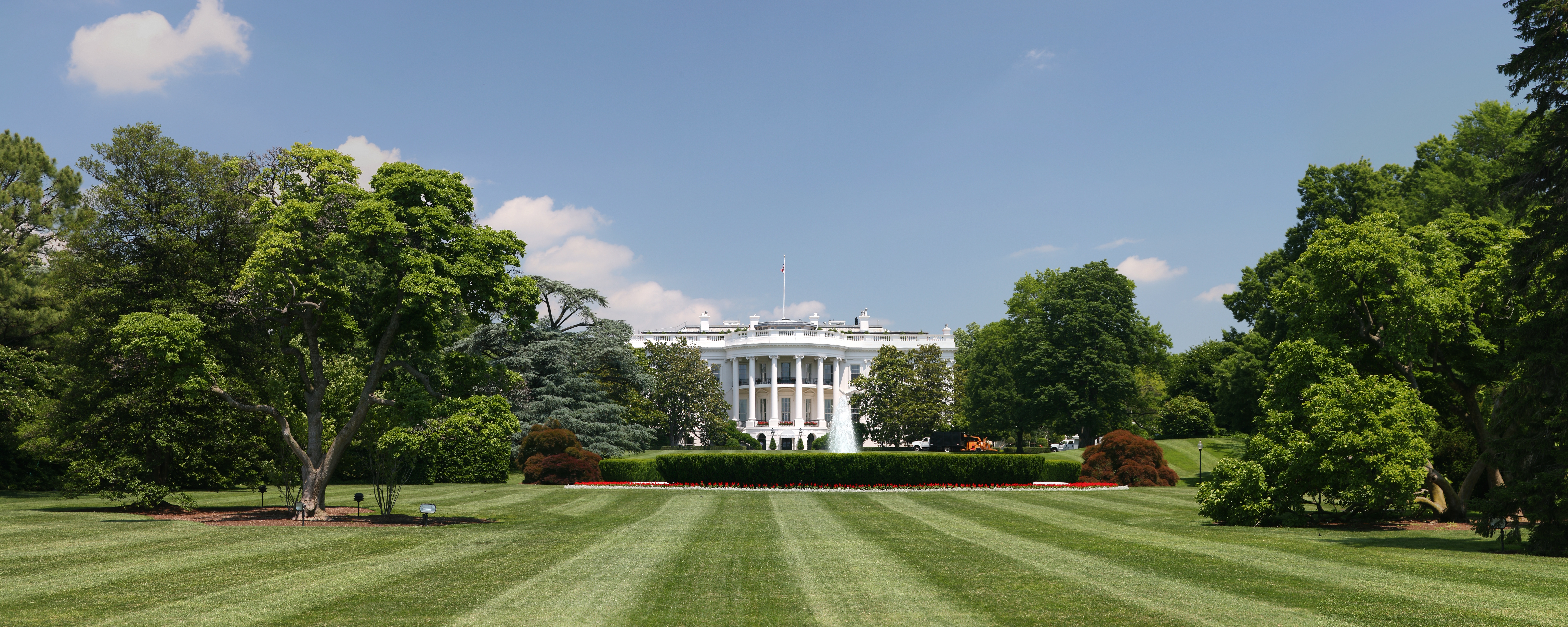
Speaking to reporters at the Oval Office in Washington, Trump was asked whether Washington and New Delhi were approaching an agreement after more than a year of intensive negotiations.
"They want to make a deal. We're going to make a deal. Pretty close, yeah," the President said.
He added that the arrangement would be "a much different kind of deal" from Washington's earlier trade pacts, but did not explain what would make it different, identify the issues still to be settled, or name a date for concluding the talks.
The comments nevertheless marked one of the most upbeat assessments yet from the White House on the prospects of an agreement, and they landed against a backdrop of unusually convergent signalling from officials on both sides.
Only hours before Trump's remarks, US Secretary of State Marco Rubio was in Mumbai, holding wide-ranging discussions with External Affairs Minister S. Jaishankar on the second day of his October 20-21 visit to India. Rubio told reporters that the two countries were "about as close as you can be without having an executed agreement."
"I think there's a small number of items left to wrap up. So, I think that will happen shortly," Rubio said, adding that once the outstanding issues are resolved, the leaders of the two countries could sign the agreement.
The Ministry of External Affairs said the two ministers reviewed the full scope of India-US relations, including trade, defence, technology, energy security and people-to-people ties, and "welcomed the progress made in negotiations on the India-US Bilateral Trade Agreement (BTA) and reaffirmed their commitment to working towards its early conclusion."
Rubio's meeting with Jaishankar took place against the backdrop of the US Freedom 250 Reception hosted by US Ambassador to India Sergio Gor in Mumbai. The ministry described the visit as reflecting "the sustained momentum of high-level exchanges between the two countries, underscoring the importance both sides attach to further advancing the India-US COMPACT for the 21st century."
Rubio, who travelled to India at Jaishankar's invitation, is to head next to Jamnagar in Gujarat for discussions on enhanced energy cooperation.
Rubio's optimism itself followed remarks by Ambassador Gor last week at the Bloomberg New Economy Forum in New Delhi, where he said "the big items are done" and the two countries were very close to "landing it."
Jaishankar, for his part, has said he is encouraged by the progress in the trade talks and that both sides are "heading toward a landing point." Earlier this month, Commerce and Industry Minister Piyush Goyal met US Trade Representative Jamieson Greer in Milwaukee and Washington to discuss the finer aspects of the deal.
India and the United States announced in February the finalisation of the framework for the first phase of the bilateral trade agreement. However, subsequent changes in the US tariff landscape led to a further round of negotiations, extending talks that have now stretched well over a year.
One of the biggest irritants was removed last Friday, when Trump waived tariffs of as much as 100 per cent on buyers of Russian oil and gas — duties that would have fallen heavily on Indian products and significantly complicated the trade negotiations.
Businesses, exporters and investors in both countries have been watching the talks closely. A concluded agreement would resolve months of uncertainty over market access and tariff treatment, and could set the terms for one of the world's most consequential trade relationships.
The negotiating history explains why officials are choosing their words carefully. The framework for the first phase of the bilateral trade agreement was announced in February, and at that point a relatively quick conclusion appeared possible.
But subsequent changes in the US tariff landscape forced both sides back to the table, and talks that were meant to wrap up early stretched through the summer and into the autumn, with officials on both sides declining to put firm dates on an outcome.
The trade talks have also become entangled with energy and strategic questions. Rubio's onward journey to Jamnagar, home to one of the world's largest refining complexes, underlines how central energy cooperation has become to the relationship.
Trump's late-Friday waiver of the punitive tariffs of up to 100 per cent on buyers of Russian oil and gas was widely read as a signal that Washington did not want the tariff weapon to poison the broader negotiation — those duties would have landed squarely on Indian goods and made any trade deal far harder to sell in New Delhi.
Rubio's trip was his second visit to the country this year, following an earlier visit to New Delhi in May, and the frequency of high-level exchanges has itself become part of the message. The Mumbai reception hosted by Ambassador Gor, attended by business and political leaders, gave Rubio a platform to project confidence that the remaining gaps are narrow.
His comment that only "a small number of items" remain to be wrapped up is the most specific account yet from the American side of how far the talks have progressed.
For Indian exporters, the stakes are concrete. Months of tariff uncertainty have complicated pricing, contracts and investment decisions for firms selling into the US market, and a signed agreement would replace guesswork with rules.
Commerce Ministry officials have been working through sector-by-sector details with their American counterparts, and Goyal's meetings with Greer in Milwaukee and Washington earlier this month were focused on what both sides called the finer aspects of the deal — the technical language where trade agreements are ultimately made or broken.
Indian officials have mirrored Washington's cautious optimism rather than declaring victory. Jaishankar's formulation — that both sides are "heading toward a landing point" — deliberately stops short of saying a landing has happened. The difference between near-complete and complete is where trade deals most often stall, and officials will know that optimism itself can become a negotiating tool.
For now, the contours of the "different kind of deal" Trump spoke of remain a matter of speculation. What is no longer in doubt is the direction of travel: with the President himself, the Secretary of State, the US Ambassador in New Delhi and India's Foreign Minister all using similar language about a landing point, the talks appear to have entered their endgame.
(Reporting based on The Hindu and The Economic Times.)